
A practical guide to managing third-party software risks, strengthening application security, and maintaining reliable business infrastructure.
Modern business applications rely on more than the code written by their developers. They also depend on external libraries, open-source packages, frameworks, plugins, and third-party software components. These dependencies help businesses accelerate development, reduce costs, and introduce new features more efficiently.
However, every external component can introduce potential security risks. A vulnerable dependency may create security gaps that expose applications, customer information, and business operations to attacks.
For SMEs operating e-commerce platforms, customer portals, APIs, databases, and internal business systems, dependency management has become an essential part of application security. As applications become increasingly interconnected, managing software dependencies is no longer solely a developer responsibility. IT teams and business leaders must understand how third-party components affect security, reliability, compliance, and operational continuity.
The challenge is establishing a practical approach that identifies risks early, maintains software integrity, and supports business growth without adding unnecessary operational complexity.
Understanding the Risks Behind Third-Party Dependencies
A software dependency is an external component that an application requires to function. Instead of building every feature from scratch, developers use existing software packages for capabilities such as authentication, database connectivity, payment processing, user interfaces, logging, and data validation.
These components may come from open-source projects, software vendors, public repositories, or external development teams.
Problems arise when a dependency contains a known vulnerability, reaches its end of life, or is no longer actively maintained.
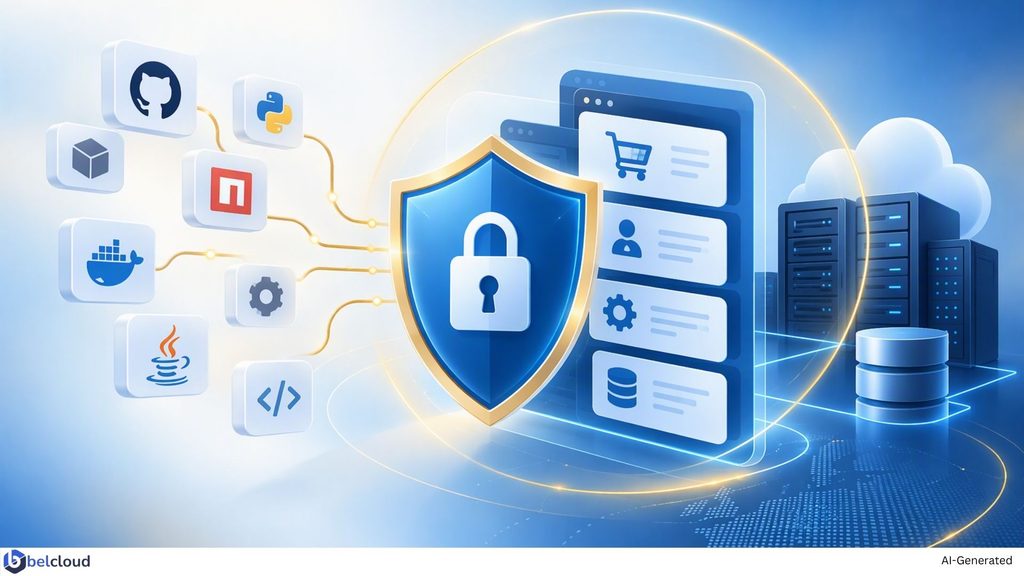
Common risks include:
- Known vulnerabilities: Security flaws that allow attackers to access sensitive information, bypass security controls, or execute malicious code.
- Outdated components: Software versions that no longer receive security updates or vendor support.
- Abandoned projects: Dependencies that are no longer maintained, leaving newly discovered vulnerabilities unresolved.
- Transitive dependencies: Indirect software components that introduce hidden risks through packages that rely on additional libraries.
- Compromised packages: Malicious or modified components distributed through software repositories, development tools, or software supply chain attacks.
As software supply chain threats continue to evolve, organisations must understand not only their applications but also the components those applications depend on.
For SMEs, one security principle is particularly important: you cannot protect what you cannot identify.
Maintaining visibility into software dependencies is just as important as maintaining the application itself.
Building a Practical Dependency Security Process
Effective dependency management does not require a large cybersecurity team. SMEs can reduce security risks by introducing structured processes supported by automation and regular reviews.
Maintain a Software Inventory
The first step is understanding which software components are being used.
This includes libraries, frameworks, plugins, operating environments, runtime components, and supporting services required by each application.
Many organisations use a Software Bill of Materials (SBOM) to maintain an inventory of software components and their versions. An SBOM helps IT teams quickly determine whether a newly disclosed vulnerability affects their applications.
Keeping this inventory updated improves visibility and reduces the time needed to assess potential exposure during security incidents.
Use Automated Vulnerability Scanning
Manual reviews are often insufficient because modern applications can contain hundreds or thousands of software dependencies.
Software Composition Analysis (SCA) tools automate the identification of vulnerable components by comparing installed software versions against published vulnerability databases.
Examples include:
- OWASP Dependency-Check
- OWASP Dependency-Track
- Retire.js
- Trivy
These tools help development teams monitor dependency-related risks and identify vulnerable or outdated components before they affect production environments.
Prioritise Security Updates
Not every vulnerability requires the same level of urgency.
Effective patch management considers several factors:
- Vulnerability severity ratings
- Active exploitation activity
- Exposure to the internet
- Potential business impact
- Availability of mitigating controls
For example, a critical vulnerability affecting a public-facing authentication service should generally take priority over a low-risk issue within an isolated internal application.
A practical update process should include:
- Reviewing security advisories and vulnerability notifications.
- Identifying affected systems and software versions.
- Prioritising remediation according to risk.
- Testing updates in a controlled environment.
- Deploying approved changes.
- Verifying application functionality after deployment.
This approach helps reduce security exposure while minimising operational disruption.
Strengthening Security Through Infrastructure and Deployment Practices
Dependency security does not exist in isolation. Infrastructure design and operational practices also play important roles in reducing application risks.
Even when software components are properly maintained, inadequate infrastructure controls or poorly managed deployment processes can introduce additional vulnerabilities.
Separate Development, Testing, and Production Environments
Deploying updates directly into production increases the likelihood of outages and unexpected application issues.
A more reliable approach is to maintain separate environments for:
- Development: Where developers write and modify application code.
- Testing or staging: Where software updates, dependency changes, and configurations are evaluated.
- Production: Where applications run and serve customers or employees.
This separation allows teams to identify potential problems before changes reach live applications.
Protect the Software Delivery Process
Modern applications often rely on automated deployment pipelines to test, package, and release software.
These processes must also be protected against unauthorised access and malicious modifications.
Organisations should:
- Restrict access to deployment systems.
- Protect source code repositories.
- Secure credentials and API keys.
- Apply role-based access controls.
- Use trusted software repositories.
- Verify software integrity whenever possible.
Implementing these controls helps prevent unauthorised changes from reaching production environments.
Choose Infrastructure That Supports Growth
Application security and reliability are also influenced by the hosting environment.
For many workloads, a Virtual Private Server (VPS) provides a flexible virtualized environment with allocated resources and administrative control. However, larger or resource-intensive production applications may benefit from Bare Metal servers, particularly when businesses require dedicated hardware resources, predictable performance, and greater infrastructure customisation.
The right infrastructure should support:
- Reliable application performance
- Separation of workloads and environments
- Appropriate security controls
- Flexible resource allocation
- Future scalability
Regardless of the hosting model, vulnerability management, system patching, monitoring, and access controls remain essential responsibilities.
How Belcloud Supports Secure Application Environments
Application security depends on both software management and infrastructure design.
Belcloud provides enterprise hosting infrastructure that enables organisations to build flexible and scalable application environments across European datacentres. Its solutions include VPS, Bare Metal servers, Object Storage, and supporting network infrastructure designed for business workloads.
For SMEs managing multiple applications, infrastructure flexibility can support several practical security and operational requirements:
- Environment separation: Organise production, testing, development, and administrative workloads into separate environments to simplify management and reduce operational risks.
- Flexible resource allocation: Align infrastructure resources with individual application requirements while allowing room for future growth.
- Infrastructure control: Use Bare Metal servers when dedicated hardware, greater workload isolation, or specialised configurations are required.
- Data protection and recovery: Establish appropriate storage and backup strategies to support business continuity and recovery efforts.
- Operational visibility: Combine dependency monitoring, system updates, access management, and infrastructure monitoring to identify potential security issues.
Belcloud’s infrastructure offering is supported by European datacentres, GDPR-focused operations, transparent pricing, and access to experienced technical support.
For businesses with demanding production workloads, Bare Metal servers can provide a dedicated infrastructure foundation. Organisations can also use their own dedicated hardware to create multiple virtual machines through suitable virtualization technologies, allowing them to organise different applications and environments according to their requirements.
The objective is to provide businesses with infrastructure flexibility while maintaining the operational controls needed to support secure applications.
Building a Sustainable Dependency Security Strategy
Protecting applications from vulnerable software dependencies is not a one-time project.
New vulnerabilities emerge continuously, software evolves, and previously trusted components can become security concerns over time.
SMEs should establish a repeatable process that combines:
- Dependency inventory management
- Automated vulnerability scanning
- Timely security patching
- Controlled deployment procedures
- Infrastructure monitoring
- Regular security reviews
It is equally important to assign responsibility for reviewing security advisories and ensuring critical updates are addressed promptly.
Businesses should also periodically remove unused libraries, plugins, and software packages. Reducing unnecessary dependencies lowers the application’s attack surface and simplifies ongoing maintenance.
Long-term success comes from treating dependency security as part of an overall operational strategy rather than an isolated technical task.
Third-party software dependencies help businesses develop and deploy applications more efficiently, but they also introduce security responsibilities that cannot be overlooked.
By maintaining visibility into software components, monitoring vulnerabilities, applying updates responsibly, and implementing structured deployment processes, SMEs can reduce security risks while maintaining application reliability.
Infrastructure also plays an important role. Secure and scalable hosting environments allow organisations to separate workloads, support controlled testing and deployment, and maintain operational resilience as applications evolve.
Belcloud helps businesses build reliable, high-performance hosting environments through VPS, Bare Metal servers, Object Storage, and networking solutions delivered from European infrastructure and supported by experienced technical professionals.
Build a more secure and resilient infrastructure with Belcloud.
Explore Belcloud hosting solutions and discover how enterprise-grade infrastructure can support your application security, performance, and operational requirements.