
Safeguard your business with resilient cloud-based disaster recovery strategies that minimize downtime, protect critical data, and keep operations running seamlessly.
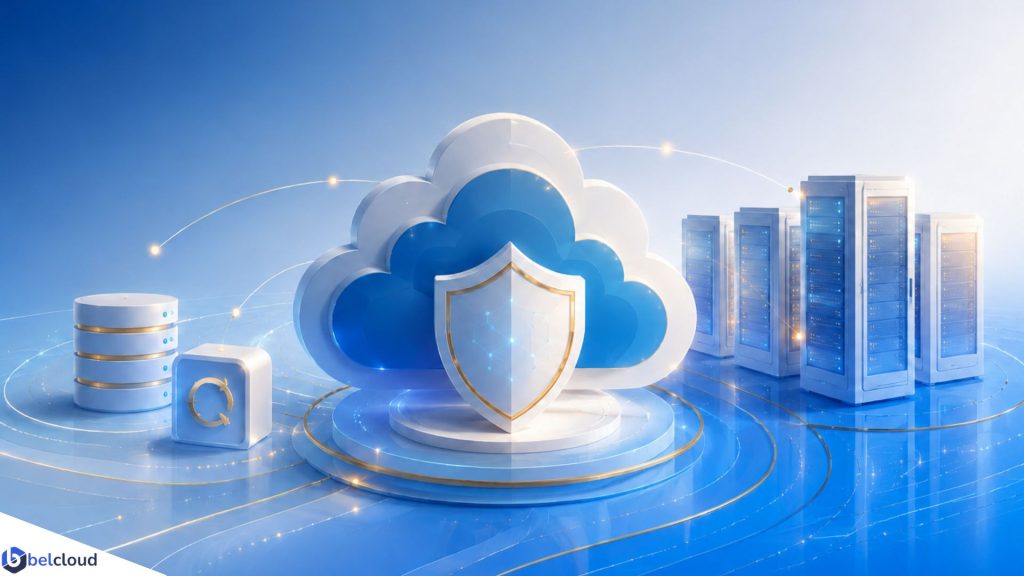
Downtime is never convenient. For small and medium-sized enterprises (SMEs), even a few hours of disruption can result in lost revenue, reduced productivity, damaged customer trust, and operational setbacks. Outages can occur at any time, whether caused by hardware failures, cyberattacks, human error, or natural disasters.
As businesses rely more heavily on cloud applications, remote work, and digital services, business continuity has become a strategic priority. Traditional backup solutions alone are no longer suffice because recovering data is only part of the equation. Organizations also need to restore the applications and infrastructure that keep operations running. Cloud-based disaster recovery servers, combined with automated failover, provide SMEs with enterprise-grade protection without the expense of maintaining a secondary data center.
Disaster Recovery Hosting: Your Business Safety Net in the Cloud
Every business prepares for growth, but far fewer prepare for unexpected disruption. Disaster Recovery Hosting bridges that gap by creating a continuously synchronized replica of your production environment within secure cloud infrastructure. Applications, virtual machines, databases, configurations, and critical workloads remain ready to be activated if the primary environment becomes unavailable.
Recovery is no longer limited to restoring files from backup. Instead, it becomes a controlled transition to a fully prepared recovery environment, allowing operations to resume quickly while minimizing downtime and data loss.
A modern disaster recovery environment typically includes:
- Continuous replication or scheduled synchronization
- Virtual machine replication
- Secure cloud storage
- Automated failover
- Disaster recovery servers
- Centralized monitoring
- Recovery orchestration
The objective is to achieve low Recovery Time Objectives (RTO) and Recovery Point Objectives (RPO), allowing organizations to restore critical services rapidly while minimizing data loss.
Inside Cloud-Based Backup and Failover
Cloud disaster recovery combines intelligent backup technologies with infrastructure replication to keep business-critical workloads available during unexpected outages.
A typical recovery workflow includes:
- Production servers continuously replicate data to secure cloud infrastructure.
- Incremental changes are synchronized at scheduled intervals to minimize bandwidth consumption.
- Backups are encrypted both in transit and at rest to protect sensitive information.
- Monitoring services continuously track infrastructure health and application availability.
- If the production environment experiences an outage, automated failover redirects workloads to replicated cloud resources.
- Once the primary environment has been restored, automated failback synchronizes workloads back to production.
The recovery process is supported by technologies such as:
- Hypervisor replication
- Snapshot scheduling
- Block-level replication
- Software-defined networking (SDN)
- Virtual Private Cloud (VPC) networking
- Load balancing
- Multi-region data replication
- Infrastructure as Code (IaC)
Together, these technologies provide enterprise-level resilience without requiring businesses to invest in duplicate physical infrastructure.
Business Continuity Starts with Disaster Recovery
Many SMEs believe disaster recovery is only necessary for large enterprises. In reality, smaller organizations often face greater operational risk because they have fewer IT resources and less room for prolonged downtime.
Cloud-based disaster recovery helps SMEs reduce operational risk while improving resilience in several key areas:
Improved Business Continuity. Critical applications remain accessible during infrastructure failures, allowing employees to continue working while customers experience little to no interruption.
Faster RecoveryAutomated failover significantly reduces recovery times compared to traditional backup restoration processes.
Lower Infrastructure Costs. Organizations gain access to highly available recovery environments without investing in a dedicated secondary data center, reducing both capital expenditure and ongoing maintenance costs.
Enhanced Security. Modern disaster recovery platforms incorporate encrypted backups, immutable storage options, role-based access controls, and integration with broader cybersecurity frameworks.
Better Regulatory Compliance. Businesses can meet data retention, availability, and recovery requirements through geographically redundant storage, audit logging, and scheduled backup policies.
The Weak Links in Many Disaster Recovery Strategies
Even organizations with backup solutions can experience extended outages if their disaster recovery strategy is incomplete.
Some of the most common mistakes include:
- Relying exclusively on local backups
- Never testing disaster recovery procedures
- Protecting data but not the applications that rely on it
- Storing backups in the same physical location as production infrastructure
- Failing to define Recovery Time Objectives (RTO) and Recovery Point Objectives (RPO)
- Depending on manual recovery processes instead of automation
- Overlooking dependencies between applications, databases, networking, and authentication services
An effective disaster recovery strategy focuses on restoring complete business operations rather than simply recovering files.
Disaster Recovery in Action with Belcloud
Imagine a growing e-commerce business hosting its online store, customer database, and inventory management platform on virtual servers.
Belcloud deploys cloud-based disaster recovery servers in geographically separate regions while continuously replicating production workloads. Incremental replication protects customer transactions and business data without placing unnecessary strain on network resources.
If the primary infrastructure becomes unavailable because of hardware failure, ransomware, or another unexpected event, automated failover immediately launches replicated virtual machines within the recovery environment. DNS records and network routing are then updated to redirect customer traffic, allowing the online store to continue accepting orders with minimal interruption.
Once the primary environment has been restored and validated, automated failback synchronizes workloads back to production, preserving data integrity while reducing operational complexity.
This approach enables SMEs to strengthen business continuity, maintain a reliable uptime guarantee, and recover rapidly without the cost and complexity of operating a dedicated secondary data center.
Build a More Resilient Business with Belcloud
Downtime is costly, but it does not have to be inevitable. With cloud-based backup, intelligent failover, and scalable disaster recovery hosting, SMEs can protect critical workloads, maintain service availability, and recover quickly from unexpected disruptions.
Whether you are safeguarding a handful of virtual machines or an entire production environment, Belcloud delivers secure, resilient cloud infrastructure designed to keep your business operating when it matters most.
Learn how Belcloud can help you build resilient cloud infrastructure with secure backup, disaster recovery servers, and dependable uptime guarantees.
Enjoyed this article? Stay ahead with Belcloud Insights, our weekly LinkedIn newsletter with new insights published every week.
Follow Belcloud on LinkedIn and subscribe to Belcloud Insights so you never miss an edition.